

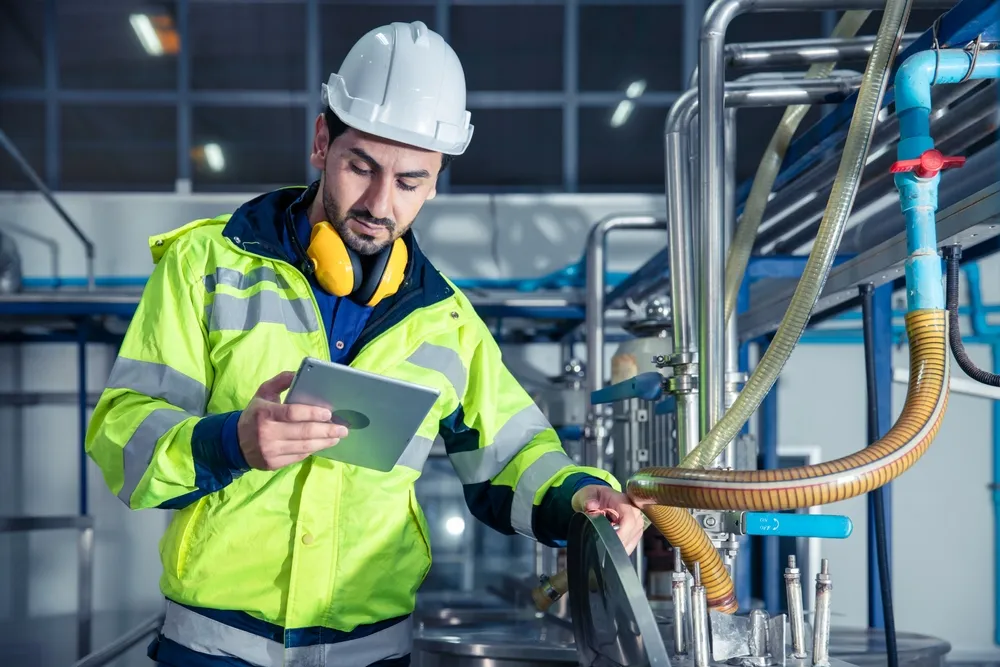

Oil and gas operations face unique challenges, combining hazardous working conditions, geographically dispersed sites, and strict regulatory requirements. From offshore platforms to refineries and remote pipelines, ensuring workforce safety and operational continuity is critical.
Team on mission (TOM) provides mission-critical communications for oil and gas operations, unifying secure voice, video, messaging and operational workflows in a single platform.
TOM helps connect field teams, coordinate activities and respond quickly to incidents across complex and demanding onshore, offshore, and remote environments.
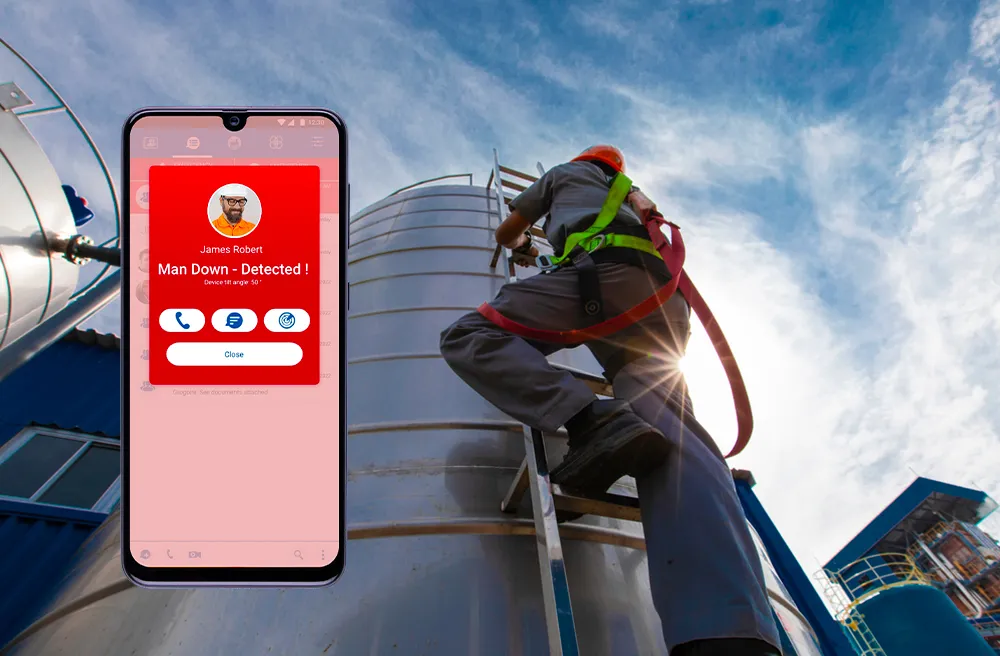
With workers often operating in confined, high-risk, or isolated areas, guaranteeing their safety at all times is essential. Whether on offshore platforms, in refineries, or along remote pipelines, TOM helps ensure every worker can be protected and located instantly in case of an emergency.
Team on mission provides:
Automatic detection and alerts ensure isolated or immobilized workers are immediately identified, supporting Lone Worker Protection for oil and gas operations.
Workers can manually trigger emergency alerts in critical situations. Alerts are instantly shared with predefined teams and command centers, including worker identity and location, enabling faster response and intervention.
Instant visibility of staff across offshore platforms, refineries, and remote pipeline zones supports faster intervention and improves operational visibility for oil and gas teams.
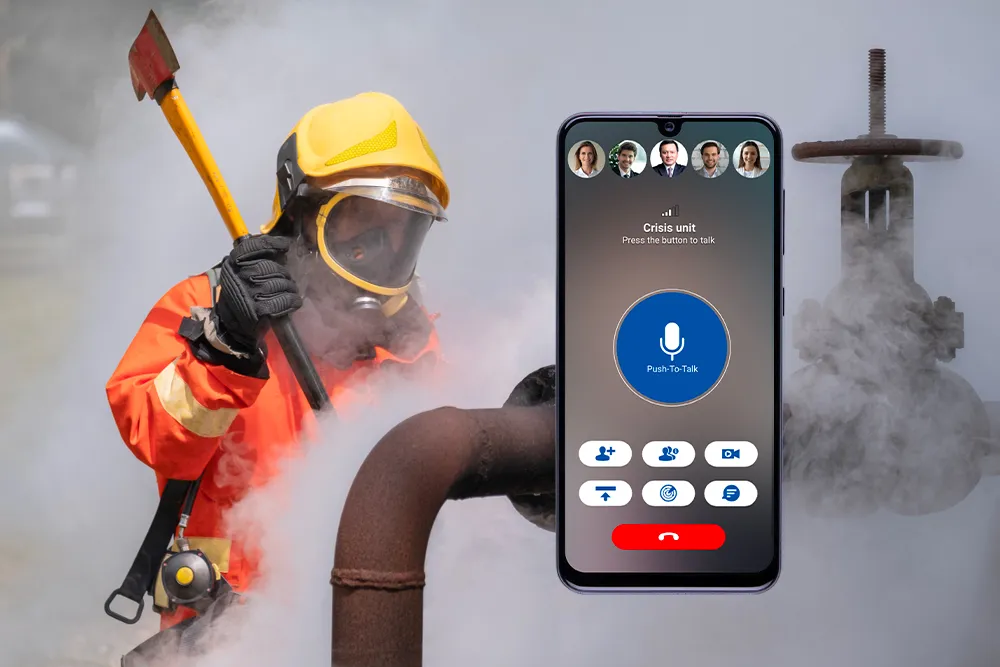
In high-risk industries like oil and gas, minutes, even seconds, can determine the severity of an incident. Fires, gas leaks, and equipment failures require an immediate, coordinated response to minimize impact on people, assets, and the environment.
With TOM, emergencies are managed in real time through:
Enabling rapid mobilization of the right teams and ensuring that critical information is shared instantly and in a structured way, supporting emergency response communications for oil and gas operations.
Providing command centers with full situational awareness and immediate visibility of field actions, status updates, and evolving risks, supporting effective crisis management for oil and gas operations.
Giving teams direct access to emergency plans, procedures, and checklists so they can act quickly, consistently, and in full alignment.
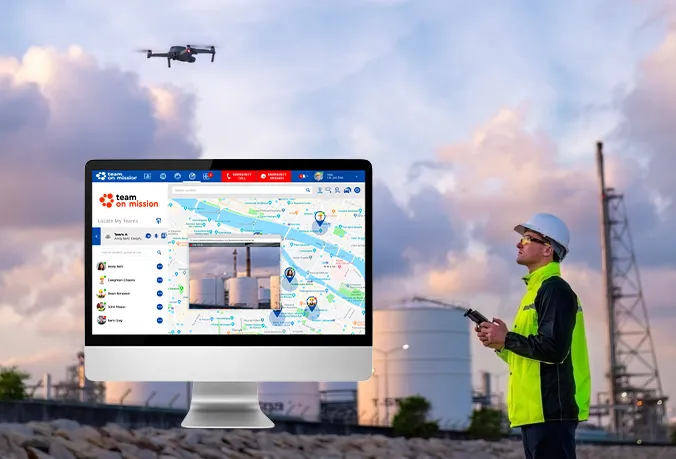
Team on mission strengthens situational awareness by providing real-time visibility into field operations. Managers and command teams gain a live overview of teams, assets, and activities across sites.
Real-time geolocation ensures instant visibility of personnel and assets, enabling better coordination during routine operations, inspections, or emergencies. Video feeds from fixed cameras, mobile devices, or drones enhance situational understanding, allowing safer monitoring of hazardous or hard-to-reach areas without exposing workers to unnecessary risk.
This operational visibility for oil and gas organizations helps teams make faster, better-informed decisions across complex sites.
Unplanned downtime in oil and gas operations can result in millions of dollars in lost production. Paper-based processes, delayed reporting, and fragmented maintenance workflows significantly increase response times.
Team on mission helps reduce downtime by digitizing maintenance workflows for oil and gas operations, streamlining incident reporting, and integrating with IoT sensors for predictive maintenance. When anomalies are detected, structured intervention orders can be automatically triggered and assigned to the right teams.
Live video for remote assistance for oil and gas field technicians enables experts to support field crews in real time, without travel delays. This accelerates troubleshooting, improves first-time fix rates, and minimizes equipment downtime, keeping operations running safely and efficiently.
The oil and gas sector is one of the most tightly regulated industries in the world. Proving compliance with safety standards, environmental rules, and operational guidelines requires complete transparency and accurate records.
TOM simplifies this process by generating digital records of inspections, safety checks, and interventions. This provides digital traceability for oil and gas operations across the entire value chain, simplifying regulatory inspections and internal compliance checks, while giving management real-time visibility into safety and operational performance.

Feature-rich for real-world complexity
Unifies MCPTT, MCVoice, MCVideo, and MCData on a single broadband platform beyond traditional radio limits.

Field-proven in mission-critical environments
Trusted by public safety and major industrial operators to ensure maximum availability across hazardous sites.

![]()
Alignment with 3GPP standards
Aligned with international 3GPP mission-critical communication standards to support interoperability, long-term compatibility, and quality of service.

Multi-device compatibility, including ATEX-certified devices
Operates across standard smartphones, rugged devices, desktops, and ATEX-certified devices for potentially explosive atmospheres.
Secure on-premises deployment
Available as an on-premises deployment, giving oil and gas organizations greater control over their infrastructure and data to support cybersecurity and data-sovereignty requirements.
Integration with legacy PMR, IoT, and IT systems
Interoperates with legacy PMR radio networks to facilitate a smooth transition and integrates with IoT platforms and IT systems to automate operational workflows.
To modernize critical communications at the Petronor refinery in Bilbao, Spain, multi-energy company Repsol began a phased transition from legacy PMR to broadband MCX communications with Streamwide’s Team on mission (TOM).
Deployed over public 4G/5G networks, TOM brings together advanced MCX capabilities, lone worker protection, and interoperability with existing PMR systems on a secure, scalable platform, strengthening worker safety and coordination while supporting operational continuity across the ATEX-classified site.
Read the full case study: How Repsol modernized critical communications at the Petronor refinery.

